
Leon County Arrest Warrants Explained
Texas Code of Criminal Procedure Chapter 15 governs arrest warrants statewide: when a magistrate may issue one, what the document must contain, and how it is executed. A sworn complaint, or another basis the law allows, brings the matter before the issuing judge. In Leon County, a justice of the peace may perform those magistrate duties. A warrant orders law enforcement to act; it does not replace checking the actual court file. For the charge, the status, and the bond or appearance path, the issuing court is the office that can confirm it.
Leon County Arrest Warrants Under Chapter 15
Chapter 15 sets the statewide rules for issuing and serving arrest warrants. It requires each warrant to identify the offense and carry the magistrate's signature. Leon County's JP page separately confirms that its justices of the peace perform magistrate functions and may issue both arrest and search warrants. The county runs three JP courts, three District Courts, a Constitutional County Court, and municipal courts. Which court is involved depends on the case and the magistrate's authority. The official Chapter 15 text spells out the full statewide warrant process.
Inside a Leon County Arrest Warrant
A warrant document ties one named person to a specific offense and an issuing magistrate. The law sets core elements, but Leon County publishes no countywide public result screen and no standard local number format. Read the court, case number, offense, and issue date together to identify the paper.
| Warrant number | number assigned by court; no shared Leon County pattern is published. |
|---|---|
| Person named | Compare lawful identifiers through the court or agency holding the file. |
| Offense | Names the alleged offense or other basis for process. |
| Issuing authority | Identifies the magistrate and court that control the order. |
| Bond or conditions | Confirm the current amount and terms with the issuing court. |
| Issue or execution date | Helps distinguish the order from later service or recall events. |
Leon County Executed Arrest Warrant Access
Under Texas Code of Criminal Procedure article 15.26, an executed arrest warrant and its supporting affidavit become public, subject to the article's terms and other protections. Search-warrant affidavits follow separate Chapter 18 rules. Ask the issuing court about access and any restriction that applies. Juvenile arrest warrants, along with the complaint or affidavit behind them, stay confidential under Family Code section 58.010. Before requesting a copy, ask the clerk which record is held and what access rule governs it. The Texas Judicial Branch access policy explains the court-record distinction.
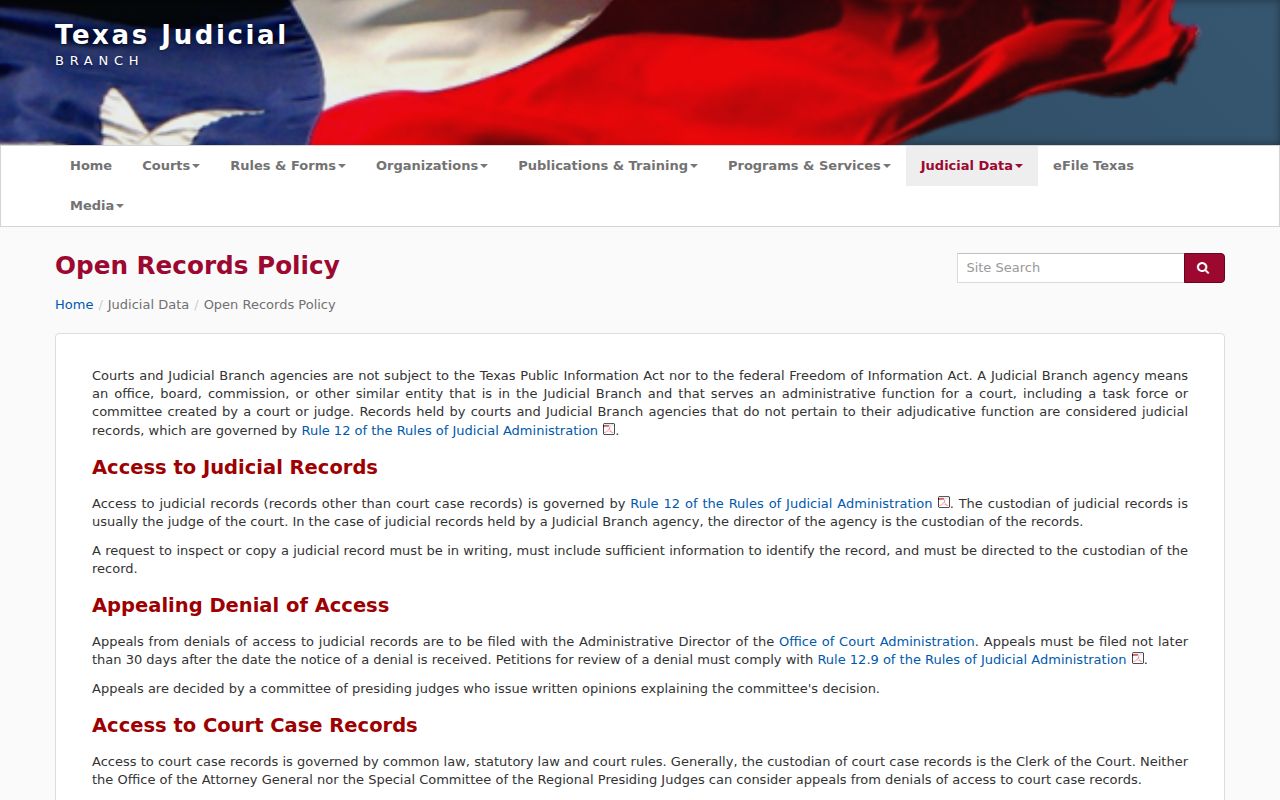
The image shows the state's court-access policy, not a Leon County warrant entry.
Serving Arrest Warrants in Leon County
The Sheriff's Office is the county law-enforcement contact named in the official county material. City police may serve municipal process, and other peace officers may serve within their own authority. Leon County publishes no unified service schedule and no direct local warrants-unit line. Call 903-536-2749 to ask which agency can answer a question about your own case and whether a visit calls for a specific procedure. If the arrest happens, booking, magistration, and bond may follow. The amount and any conditions must come from the current case record.
Leon County Arrest Warrant Clerk Records
The District Clerk keeps felony and district-level criminal documents for the 87th, 278th, and 369th District Courts. The County Clerk holds Constitutional County Court misdemeanors and, through a criminal deputy, manages related capias, warrants, bonds, payments, and OmniBase reporting. County-level criminal docket questions go through the County Attorney at 903-536-2131; collections questions go to the County Clerk at 903-536-2352. Call the clerk matching the court before filing a record request. The County Clerk page lists misdemeanor service, and the District Clerk page lists criminal-search contacts.
Leon County Arrest, Summons, and Bench Warrants
These court papers are not interchangeable. An arrest warrant authorizes taking a person into custody, a summons directs a person to appear, and a bench warrant follows a missed court obligation. Leon County's court-and-clerk split determines where to confirm each one.
| Feature | Arrest Warrant | Summons | Bench Warrant |
|---|---|---|---|
| Order | Take the named person into custody | Appear at a stated time or answer a case | Bring the person before the court |
| Usual trigger | Sworn basis or authority under law | Pending matter without an arrest order | Missed appearance or court obligation |
| Issuing source | Judge or magistrate | Court or authorized officer | Judge in the existing case |
| Next step | Confirm charge and bond with counsel or court | Appear as directed | Ask the issuing court about recall or a reset |
The Leon County bench-warrant search covers the separate missed-obligation process.
Leon County Federal Arrest Warrant Records
Federal cases are a separate world from Leon County courtrooms. The U.S. District Court for the Eastern District of Texas and the U.S. Marshals Service handle federal cases and warrant service. A Leon County JP, municipal court, County Clerk, or District Clerk cannot clear a federal warrant. A federal docket may sit in another division or be sealed entirely. Anyone who believes a federal warrant exists should speak with federal counsel or contact the federal court before appearing at a county office. The Eastern District of Texas court provides the official federal case route.
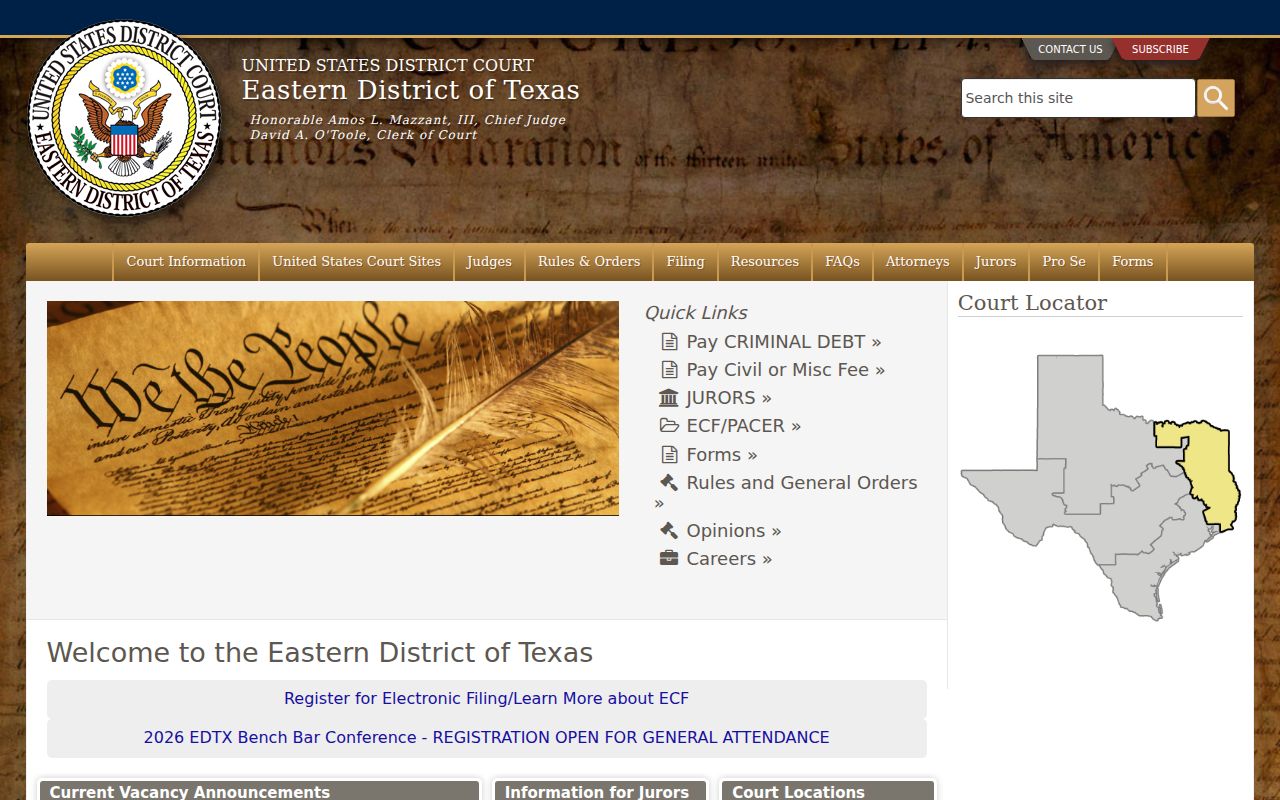
That federal court page runs on a system apart from Leon County courts. PACER opens federal case dockets, subject to its own access and fee rules.
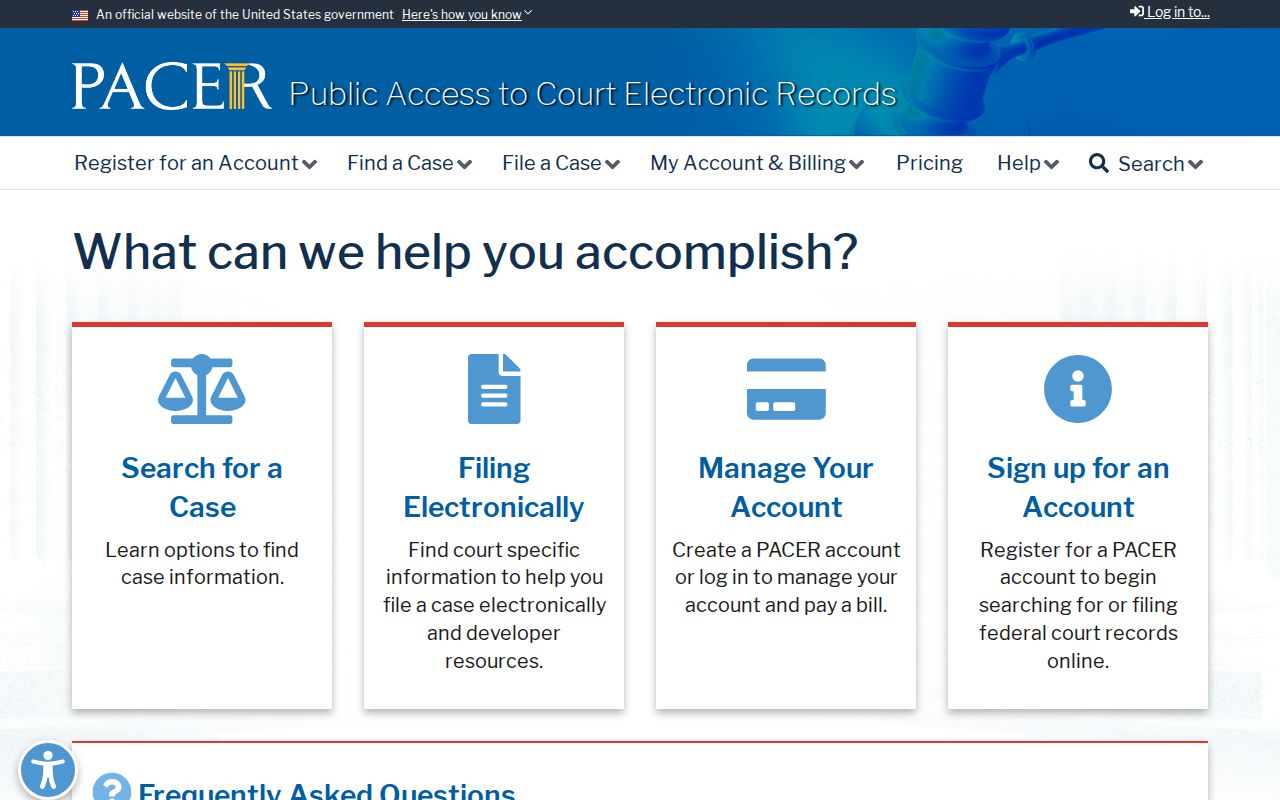
A PACER search is a docket tool, not a county warrant search.
Respond to a Leon County Arrest Warrant
First confirm the issuing court, case number, charge, execution status, and bond terms. Then call the court or Sheriff's Office to learn which agency handles the next step. A lawyer can arrange a voluntary appearance, bond, surrender, or a motion to recall or quash a Leon County warrant when the case allows.
Important: Speak with counsel or the issuing court before appearing in person, and confirm the current bond and booking procedure first.
Verify identity through the lawful court process in Leon County. Never rely on a name match alone.
Leon County Arrest Warrants Need Identifiers
A name match can be wrong. Use a cause number, date of birth, and issuing court to separate similar names, and ask the clerk to confirm which case is yours. Leon County publishes no person-level list or photograph, so the official clerk is the check that counts. The County Clerk form asks for identifying and case details, and the District Clerk runs a separate search route. If the case is juvenile, Family Code confidentiality rules apply.