
Leon County Bench Warrants Explained
A bench warrant is judge-directed process tied to a court obligation. In Leon County, the JP plea form warns that failing to respond can add an FTA charge and lead to an arrest warrant. A missed appearance, unpaid fine, or failure to comply may create a warrant or capias, but the exact order depends on the case.
Do not assume every missed date produces the same result. Ask the court whether it entered an FTA notation, issued an arrest warrant, or took another step. The Sheriff's Office may serve process, but the issuing judge controls what resolves it.
Leon County Bench Warrants and Court Settings
The county's JP plea material warns of an added FTA charge, a possible arrest warrant, a DPS entry, and a $50 state warrant fee per warrant if a person does not respond. That warning is tied to the JP process and should not be applied to every court or charge.
For a district case, the county says to contact the proper court coordinator for the current setting and use the Setting Request Form. For a JP or city ticket, call that lower court and ask what the docket shows.
District Court setting instructions identify the coordinator route.
How Leon County Bench Warrants Are Issued
The judge in the underlying case decides whether an unmet obligation calls for an arrest warrant or another court order. The County Clerk's criminal-deputy description confirms that the office issues capias and warrants with a judge's order and coordinates them with the Sheriff's Office.
After issuance, the record remains under the issuing court's control. A warrant may be served by the Sheriff's Office or another authorized officer. OmniBase reporting is separate and does not create or confirm a warrant.
Leon County Bench Warrants, FTA, and Capias
FTA means failure to appear. A capias is a writ directing arrest in a criminal case; a capias pro fine relates to collection of a fine or judgment. These labels may appear in different local files, so ask the clerk which order was issued and what the judge requires.
- FTA
- A missed required appearance or a court notation about it.
- Capias
- A writ that directs an officer to bring a person before the court.
- Capias pro fine
- A fine-collection writ, distinct from a new probable-cause arrest warrant.
- Recall
- The court withdraws its outstanding process.
Leon County Bench and Arrest Warrants Compared
A bench warrant follows a court obligation such as a missed setting. An arrest warrant follows a sworn complaint or another lawful basis for taking a person into custody. Both may lead to arrest, but they start from different events and may sit in different court files.
| Feature | Bench Warrant | Arrest Warrant |
|---|---|---|
| Trigger | Missed court date or unmet court order | Sworn complaint or other basis allowed by law |
| Who issues | Judge in the existing case | Judge or magistrate |
| Underlying file | Case with a missed setting or obligation | Case alleging an offense |
| Next step | Ask about recall, appearance, or a reset | Confirm charge, bond, and appearance path |
The Leon County arrest-warrant search covers the separate probable-cause process.
Leon County FTA Warrant Recall
Texas Code of Criminal Procedure Chapter 45A says a judge must recall an FTA warrant in covered justice and municipal cases when the defendant voluntarily appears and makes a good-faith effort to resolve the offense before execution. The statute does not promise an automatic dismissal of the underlying case.
Ask the court whether the rule applies, whether the person must appear, and what proof or payment it accepts. Keep any written recall order or confirmation.
Read Chapter 45A's FTA recall provisions alongside the issuing court's instructions.
The statute sets a legal rule; the court supplies the case-specific appearance procedure.
Resolving a Leon County Bench Warrant
The safest first move is to identify the issuing court and ask what happened after the missed setting. Counsel can help decide whether to seek a new date, make a voluntary appearance, post an ordered bond, or ask for recall or quash. No local warrant-recall filing fee was located in the research.
- Call the issuing court with the case number and ask whether a warrant is active.
- Ask about appearance, payment, bond, and any motion the court will accept.
- Speak with a lawyer before an in-person appearance if arrest or bond terms are a concern.
- After the court acts, ask how it will record recall and report any separate FTA/FTP hold.
Caution: Do not treat online payment as proof of recall. Get the issuing court's confirmation and keep the receipt or order.
Leon County Bench Warrant License Holds
OmniBase and DPS handle certain failure-to-appear or failure-to-pay reports tied to license renewal; they are not warrant databases. After a court resolves a violation, the separate program record may take up to seven business days to update. Ask the issuing judge about the warrant itself, then follow up with the reporting court if a license hold remains.
Leon County JP and City Court Warrants
JP1 in Buffalo, JP2 in Centerville, and JP4 in Marquez publish separate contact and payment routes. Buffalo, Jewett, Normangee, Oakwood, and Marquez also have municipal-court listings. A city ordinance case belongs with the city court; a JP citation belongs with its precinct.
The court directory lists contacts but is not a warrant register. If the paper does not clearly name its court, ask the County Clerk or Sheriff's Office to help route the question before going in person.
Leon County District Court coordinators
87th and 369th District Courts: 903-536-1032
278th District Court: 936-436-4639
The District Court dates page directs callers to the proper coordinator for current settings.
The 278th District Court page lists its coordinator and court links.
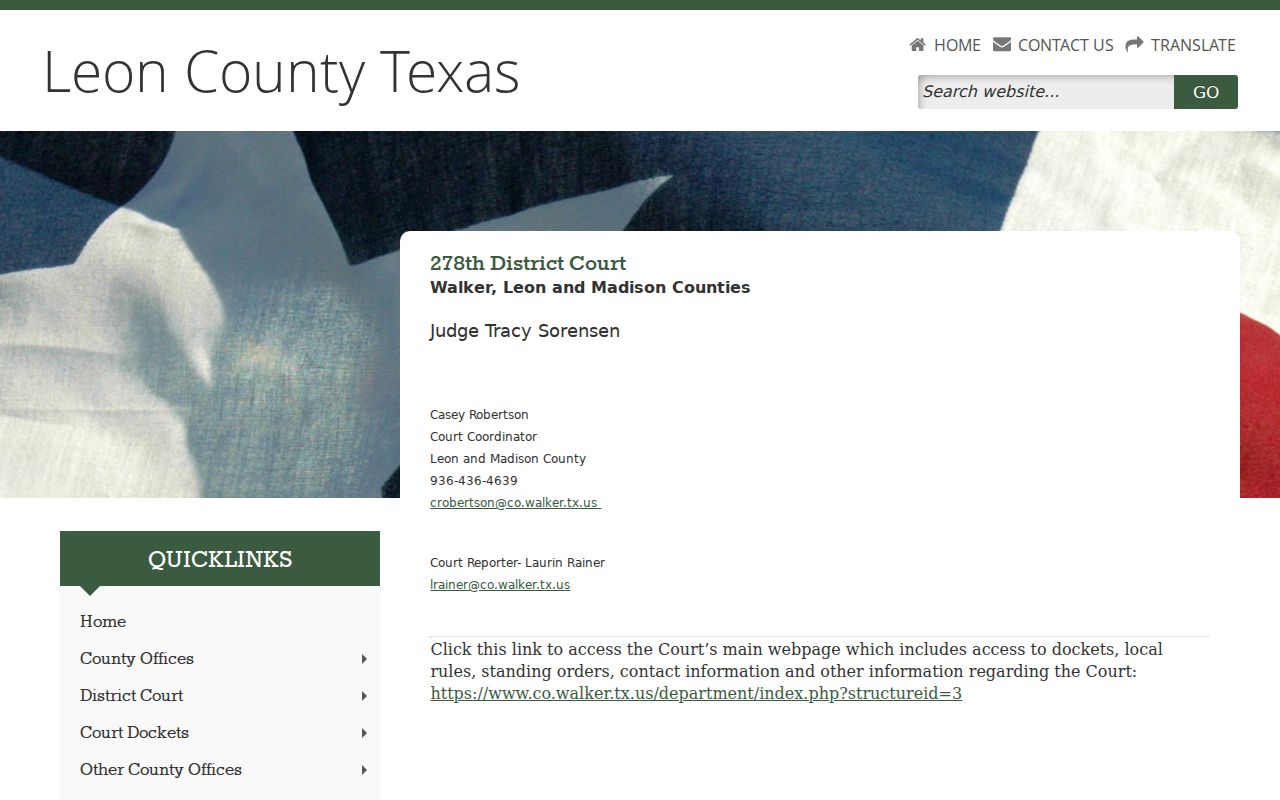
The 278th Court also serves other counties, so confirm that the docket number belongs in Leon County.
The 369th District Court page provides its separate docket and coordinator details.
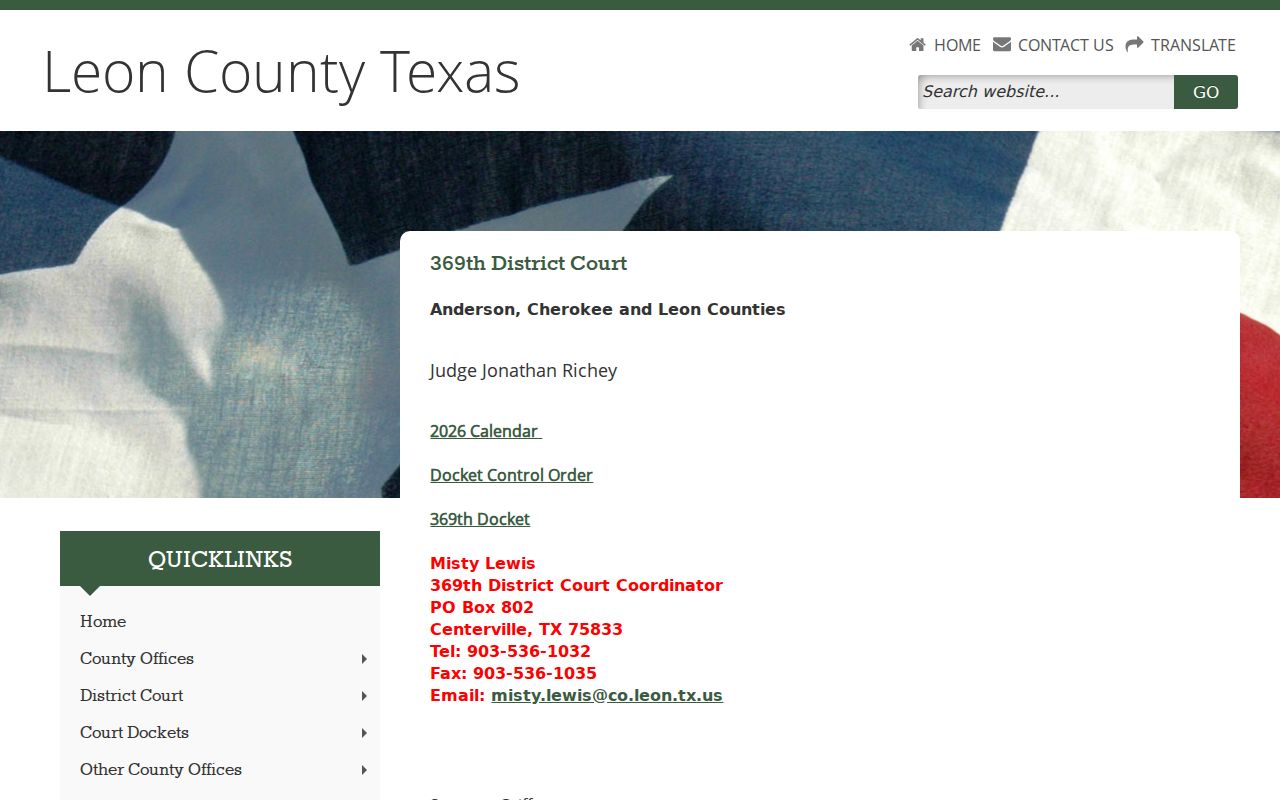
Use the court's own page to verify which coordinator handles a pending case.
Finding the Court That Issued the Warrant
Look at the citation, bond paper, or case notice for a court name and cause number. District files belong with the District Clerk; county misdemeanors with the County Clerk; and fine-only matters with a JP or municipal court. The sheriff may serve an order, but cannot replace the issuing judge's recall decision.
If the court is still unclear, use the Leon County warrant lookup steps to route a search or written request. Call before traveling because the county does not publish a special warrant walk-in window.
The 87th District Court, the 278th District Court, and the 369th District Court publish separate coordinator information:
87th Court, 278th Court, and 369th Court.
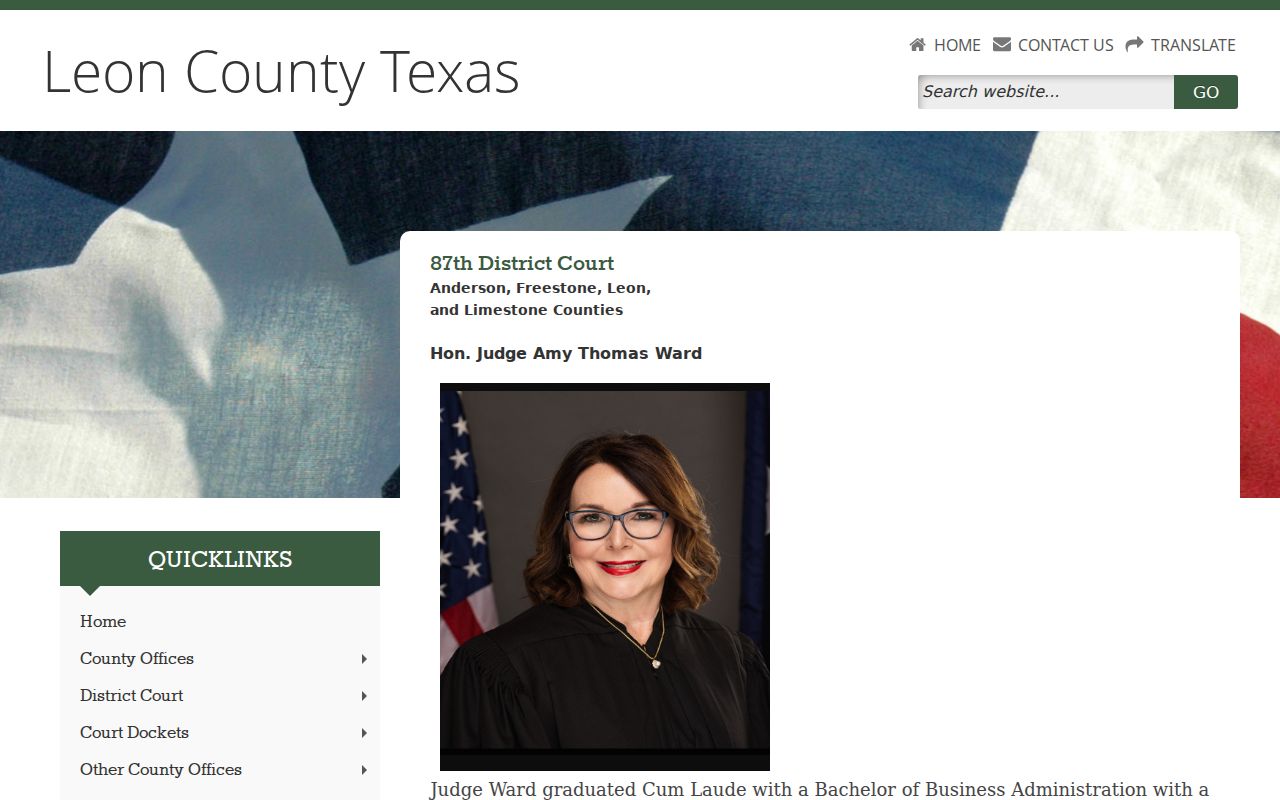
The coordinator can direct a setting question to the right district docket.
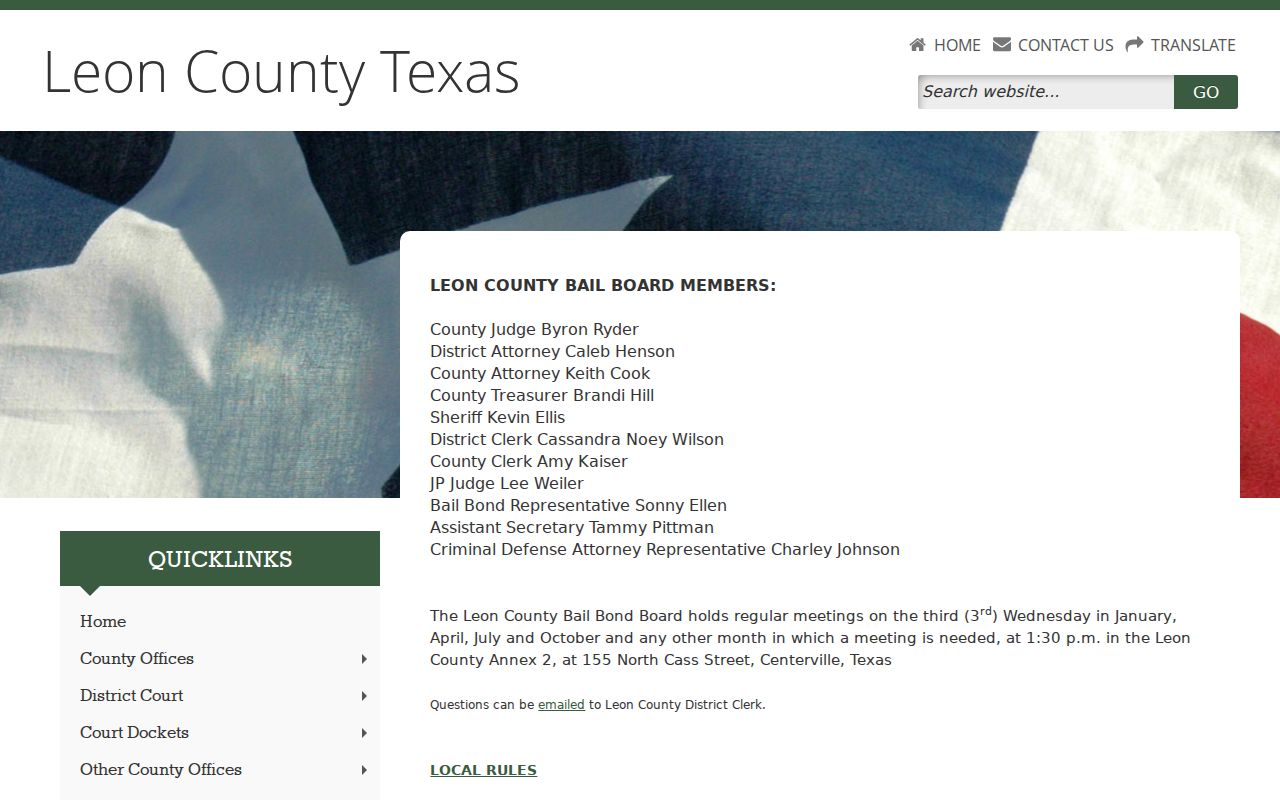
Bond questions also have a separate channel. The Bail Bond Board regulates local sureties; its application fees and security figures are not a defendant's bond amount.
The Bail Bond Board page lists local rules and meeting information.
Ask the issuing court for the amount and conditions set in the particular case.